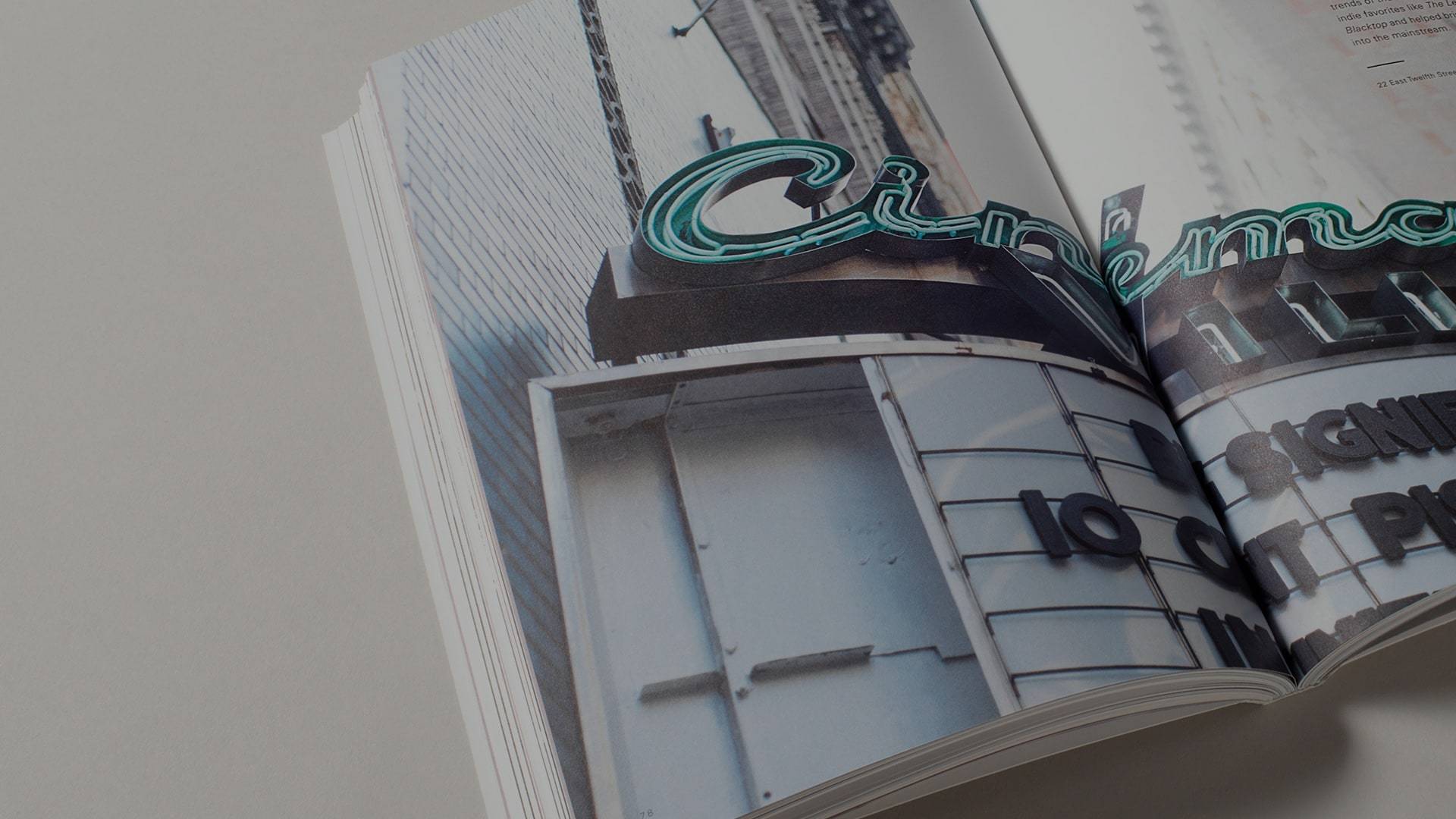
21 East 12
The beating heart of Greenwich Village
VIEW PROJECT
This is used on the Culture, Team and Contact pages. It has some built in options to control font sizes and text container widths, The background colour can also be changed. In theory it could be used on Work case studies for quote-like implementation. Probably looking at padding big
This is the text & media component using a static image.
Try not to place too much text in here, otherwise it will break the component. Split the text across multiple if you must, since too much text in a single component is simply bad UX and nobody wants to read that much anyway. The image should be 1:1 or 8:9 ratio
AI research experienced cycles of enthusiasm followed by “AI winters” when progress slowed and funding diminished. The field regained momentum in the 1990s with advances in machine learning approaches that allowed systems to improve through experience rather than explicit programming.

Text and Media using a slider variation.
It auto slides, timings are global across these types of sliders. Use 1:1 or 8:9 images
The early 21st century marked a turning point with the rise of deep learning, neural networks with multiple layers that could identify complex patterns in vast amounts of data. This breakthrough, coupled with increasing computational power and data availability, catalyzed rapid advancement across numerous AI applications.



50/50 video-text.
This is a video iframe from vimeo you’ll need to create a bespoke video at the correct ratio if you want it to scale properly. Use 8:9 video
The early 21st century marked a turning point with the rise of deep learning, neural networks with multiple layers that could identify complex patterns in vast amounts of data. This breakthrough, coupled with increasing computational power and data availability, catalyzed rapid advancement across numerous AI applications.


Full width content is the main text component
It has 3 sizes with fields for the title and body. As with all copy try to be concise, this website is not Wikipedia! You can change colour of the back as with all components
Throughout this evolution, AI has continuously challenged our understanding of intelligence itself, prompting deep philosophical questions about consciousness, creativity, and what it means to think.

By the 2020s, large language models emerged as a transformative technology, capable of understanding and generating human language with unprecedented fluency. These systems have revolutionized how we interact with technology, enabling more natural and intuitive human-computer interaction

Somewhere between the science of baking and the secrets of AI, civilizations past and present collide in a swirl of algorithms, enzymes, and unpredictable outcomes—reminding us that even the best-laid plans (or recipes) are subject to a little beautiful disorder.
Elsewhere, AI-powered ovens hum softly in the background, analyzing the fermentation patterns of magical doughs and predicting the next great civilization’s preferred breakfast pastry.

Meanwhile, dragons—unimpressed by mere mortals—hoard bio-engineered grains in their lairs, convinced that the secret to true immortality lies somewhere between a well-baked loaf and an algorithm that dreams.

History books, written in enchanted ink, recount the rise and fall of empires fueled by bread, fire, and a dash of mathematical uncertainty. In this world, the science of baking is as much about spells and stories as it is about enzymes and entropy.

The highway to Hell
Dragons Manor
Fictionville
Mordor
AI LABS
The 4 Kingdoms
07123456789
shrek@skynet.com

In the shadowed halls of the ancient city, goblins debate the optimal temperature for yeast activation while wizards scribble equations for quantum flour in their spellbooks.
Small hero as a quote example using the sub copy field. If there's no heading then the top padding could be an issue

In the grand tradition of chaos theory, where a butterfly’s wing might just nudge a bread loaf into a perfect rise, modern bio-engineers are now tinkering with sourdough microbes the way ancient Egyptians once mapped the stars.